|
"Instead of mercilessly judging and criticizing yourself for various inadequacies or shortcomings, self-compassion means you are kind and understanding when confronted with personal failings – after all, who ever said you were supposed to be perfect? You may try to change in ways that allow you to be more healthy and happy, but this is done because you care about yourself, not because you are worthless or unacceptable as you are. Perhaps most importantly, having compassion for yourself means that you honor and accept your humanness. Things will not always go the way you want them to. You will encounter frustrations, losses will occur, you will make mistakes, bump up against your limitations, fall short of your ideals. This is the human condition, a reality shared by all of us. The more you open your heart to this reality instead of constantly fighting against it, the more you will be able to feel compassion for yourself and all your fellow humans in the experience of life. Read more: What Self-Compassion is not" 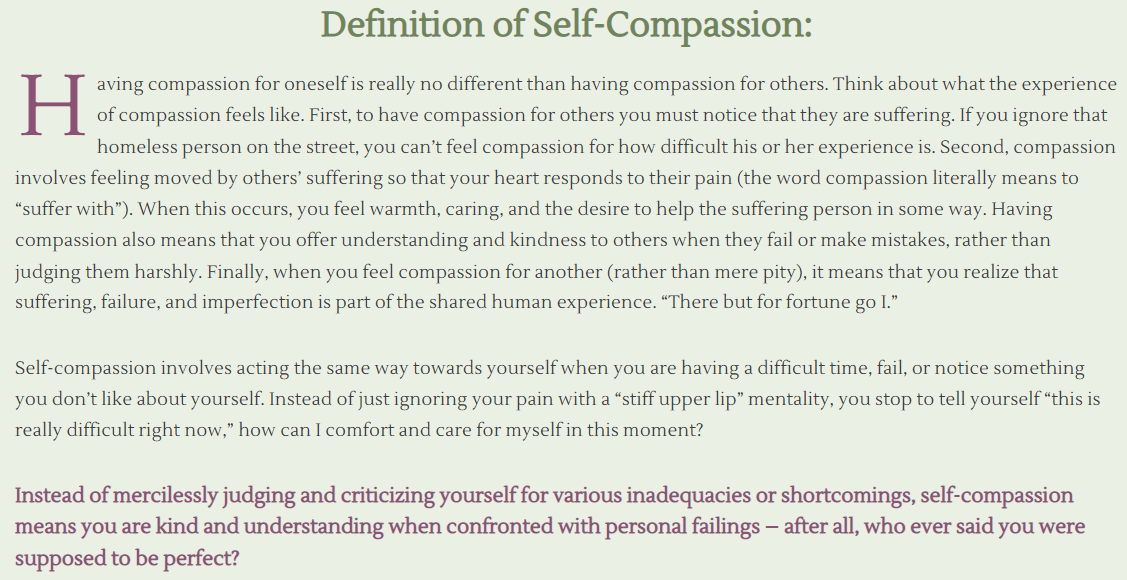 On June 23, 2022, Peter Schmidt, M.D., Chief of the Section on Behavioral Endocrinology in NIMH's Intramural Research Program, led a discussion on the menopause transition and depression during a Facebook Live event. Dr. Schmidt was joined by his research team, Sarah Rudzinskas, Ph.D., and Sarah Spector, MSN, FNP-C. During this Facebook Live event, the experts discussed the signs, symptoms, treatments, and latest research on the menopause transition and depression. "The sex hormones estrogen and testosterone are critical regulators of bone health, contributing in different but complementary ways to the development of bone strength and structure during puberty. The typical patterns and timing of pubertal development are significantly altered in transgender youth who undergo gender-affirming hormone therapy (GAHT) during adolescence, and the effects of these hormonal regimens on the process of bone development are not fully understood. Transgender youth, particularly youth transitioning from male to female, may have delays in development of overall bone strength that improve over time...In a survey published by The Trevor Project in 2019, nearly 2% of youth identified as transgender, more than double a 2017 estimate from a survey of adults. And while not every transgender individual undergoes gender-affirming hormone therapy, young people identifying as transgender and their families need more information about the effects of GAHT on bone health to minimize risk and improve long-term health outcomes."  Northwestern University: "Nobody Knows the Trouble I've Seen: The Emotional Lives of Black Women"3/27/2022 "A strong Black woman is a cultural icon. But when Black women cling to that image rather than acknowledging and addressing the stress and trauma so many have experienced, they may experience mental and physical problems, says Northwestern Medicine clinical psychologist Inger Burnett-Zeigler. Burnett-Zeigler wants to help them confront their pain and suffering, and learn tools for coping through her new book, "Nobody Knows the Trouble I’ve Seen: The Emotional Lives of Black Women (Amistad, June 29, 2021.)" An estimated eight out of 10 Black women have experienced some form of trauma. Burnett-Zeigler describes the different types of trauma Black women often endure — intergenerational trauma, childhood trauma, abusive relationships, pregnancy trauma — through her own personal stories and the stories of family members and clients. Rather than maintaining the cultural expectation of being strong, which can lead to anxiety, depression, hypertension, diabetes, heart disease and more, Burnett-Zeigler offers Black women a new framework in which to understand how their life experiences have impacted them. Then she shows them how to adopt practices for body and mind health. Inger Burnett-Zeigler is an associate professor of psychiatry and behavioral sciences at Northwestern Feinberg School of Medicine. She has two decades of clinical experience helping people with stress, trauma, anxiety and depression. She spoke with Northwestern Now recently." "It’s never too early to start to have conversations about race with your kids. In fact, experts at Yale University have found that by 6 months of age, infants can notice differences in skin color and hair textures; by 2 years old, children can point out differences in skin color; by age 3, children can form judgments about people based on racial differences; and by 5 years, a child can show many of the same racial attitudes that adults have. Dr. Sheila Modir, a pediatric psychologist at CHOC, wants to help parents find the right approach for starting conversations about race with their children. Here, she discusses developmentally appropriate dialogue for all ages and addresses common questions."  The Washington Post: "Scientists may have found the perfect bedtime to keep hearts healthy"2/14/2022 "Many of us feel we’re never getting enough sleep, blaming young children, snoring partners, the stresses of life or uncomfortable pillows. Scientists in Europe have said that research into the links between sleep and heart health often relies on foggy recollections or unreliable sleep diaries. Now, by attaching wrist-worn accelerometer devices to more than 88,000 people, they have been able more accurately to monitor sleep patterns and say they could have found an optimal bedtime to keep hearts healthy. Going to sleep between 10 p.m. and 11 p.m. is associated with a lower risk of developing heart disease in comparison with earlier or later bedtimes, according to a study published...in the European Heart Journal — Digital Health." 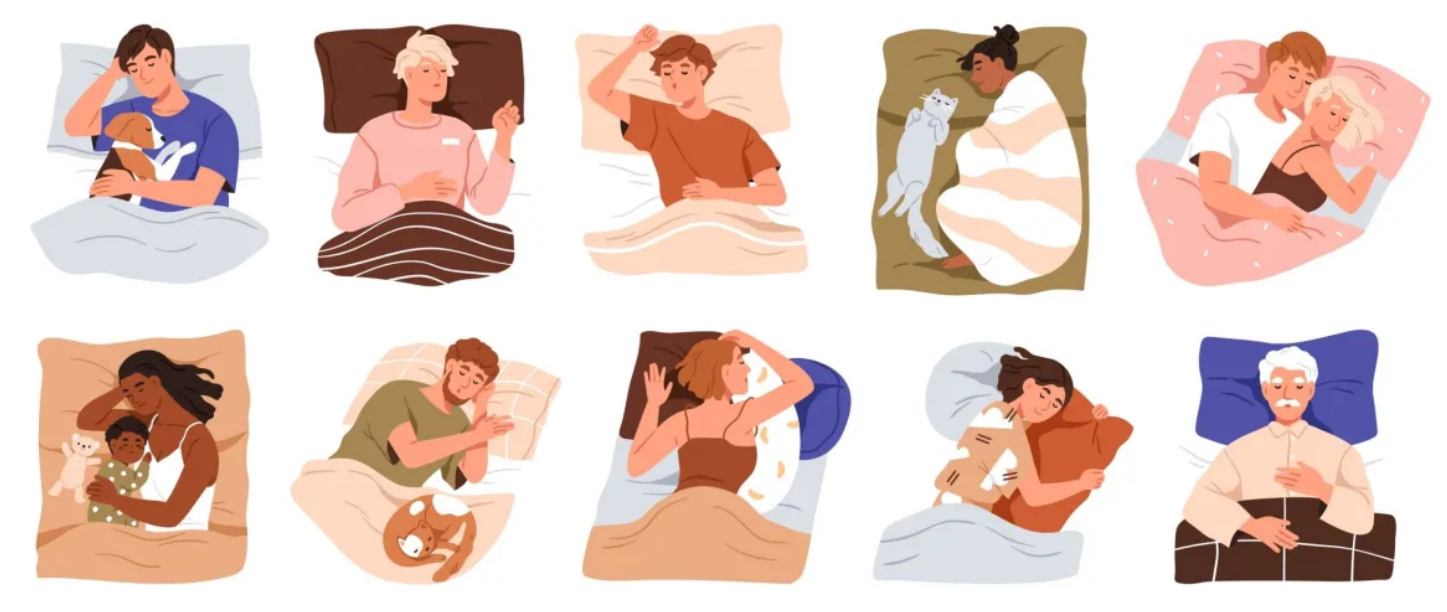 "Earthing (also known as grounding) refers to the discovery that bodily contact with the Earth’s natural electric charge stabilizes the physiology at the deepest levels, reduces inflammation, pain, and stress, improves blood flow, energy, and sleep, and generates greater well-being. Such effects are profound, systemic, and foundational, and often develop rapidly. Earthing is as simple as routinely walking barefoot outdoors and/or using inexpensive grounding systems indoors while sleeping or sitting, practices that restore a lost and needed electric connection with the Earth."  "In a small study of adults with major depression, Johns Hopkins Medicine researchers report that two doses of the psychedelic substance psilocybin, given with supportive psychotherapy, produced rapid and large reductions in depressive symptoms, with most participants showing improvement and half of study participants achieving remission through the four-week follow-up. A compound found in so-called magic mushrooms, psilocybin produces visual and auditory hallucinations and profound changes in consciousness over a few hours after ingestion. In 2016, Johns Hopkins Medicine researchers first reported that treatment with psilocybin under psychologically supported conditions significantly relieved existential anxiety and depression in people with a life-threatening cancer diagnosis. Now, the findings from the new study, published Nov. 4 in JAMA Psychiatry, suggest that psilocybin may be effective in the much wider population of patients who suffer from major depression than previously appreciated."  "Currently, 30 percent of American adults suffer from some form of insomnia, but the condition affects Black women disproportionately. For example, even when studies account for socioeconomic status, Black women report shorter total sleep time than White women and greater difficulty falling asleep and staying asleep. However, there have been no studies published to date that focus on psycho-behavioral interventions for Black women to address their sleep deficits."  |
Resources & ResearchMental health resources, news, and research recommendations. Archives
August 2022
Categories
All
|



 RSS Feed